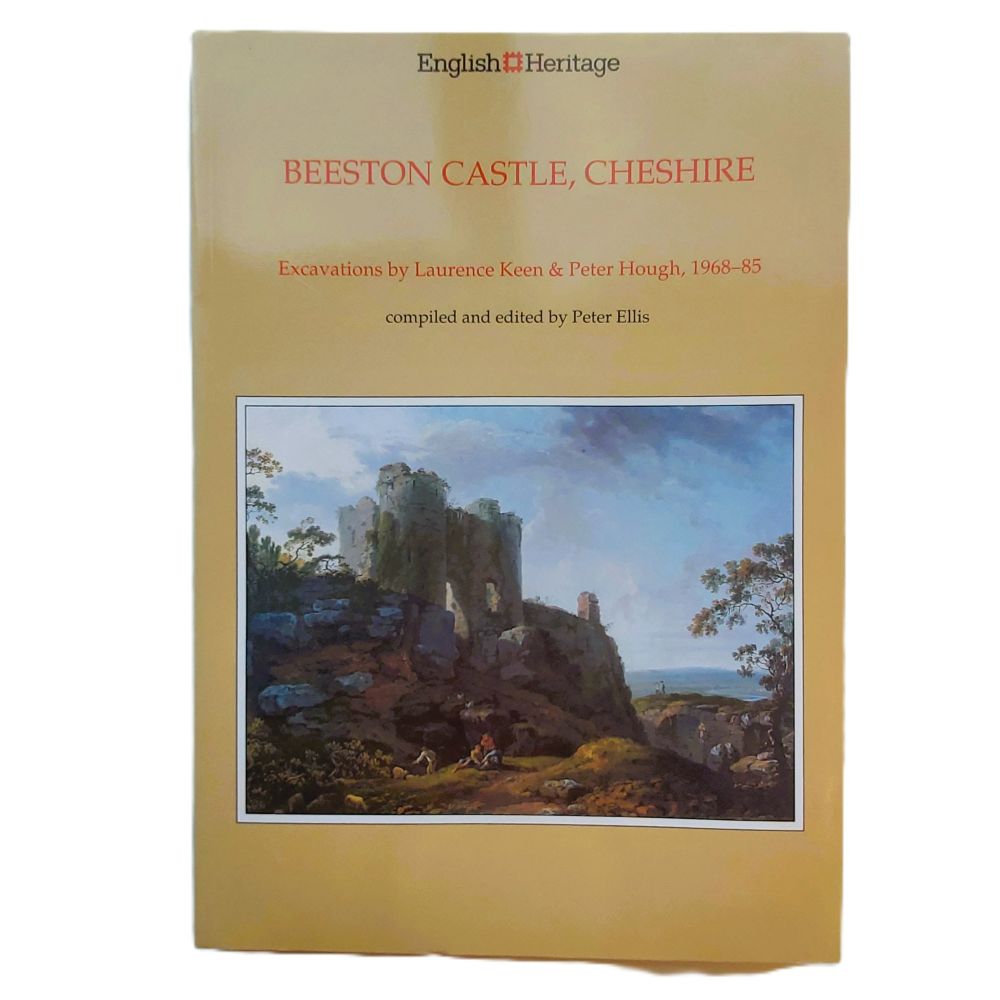
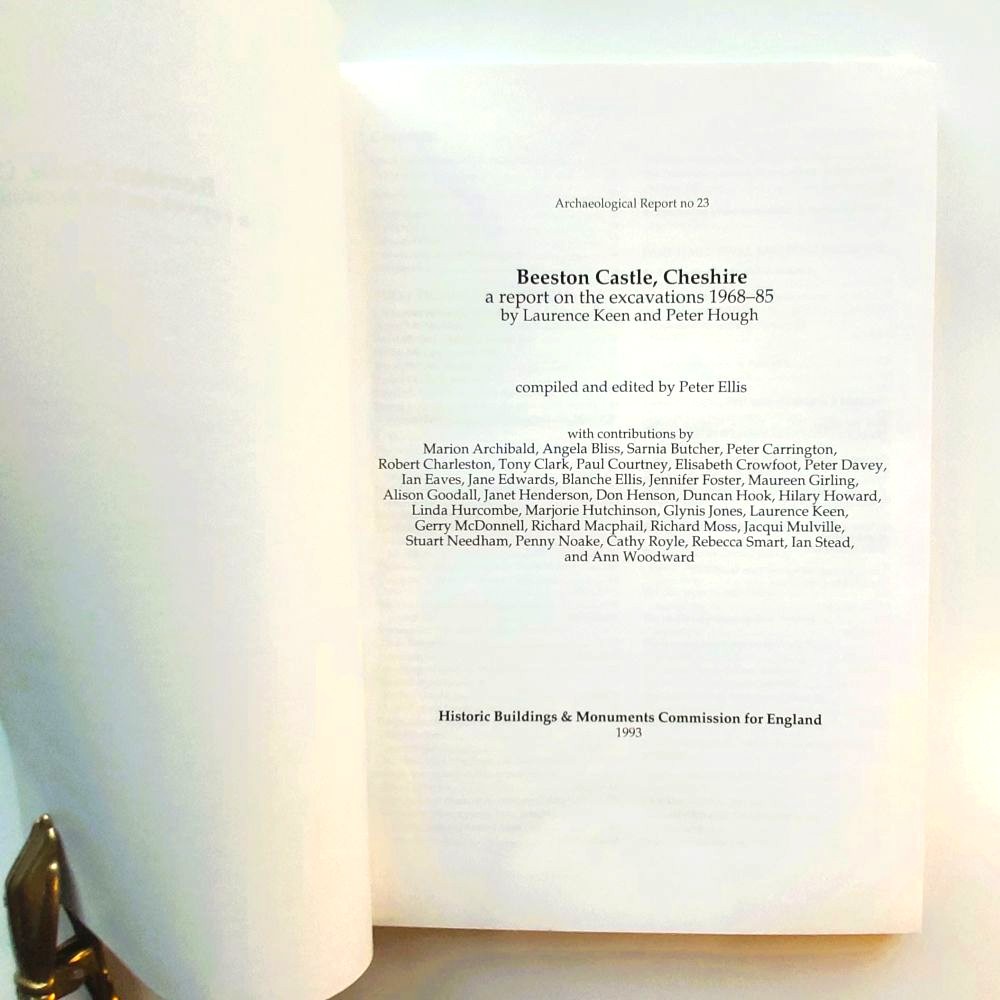
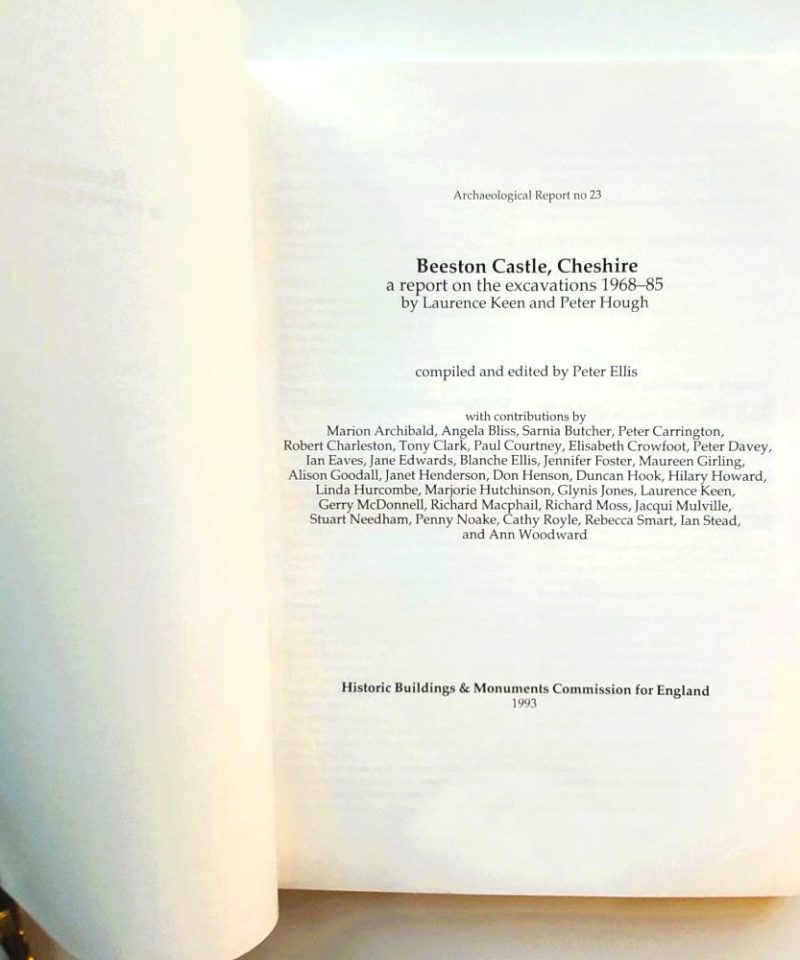
Beeston Castle, Cheshire: A Report on the Excavations 1968–85 by Laurence Keen and Peter Hough (Archaeological Report no 23)

£35.00
ISBN10: 1-85074-429-7
ISBN13: 978-1850744290
AUTHOR: Compiled and edited by Peter Ellis (with multi-specialist specialist contributions)
DATE: 1993 First edition
BINDING: Paperback glossy card covers
PUBLISHER: Historic Buildings & Monuments Commission for England
CONDITION: Very good.
1 in stock
Beeston Castle, Cheshire: A Report on the Excavations 1968–85 by Laurence Keen and Peter Hough (Archaeological Report no 23)
1993 Historic England Press large format out of print paperback edition. 229pp Extensively illustrated throughout with archaeological site plans, section profiles, artifact line drawings, maps, and photographic plates, plus microfiche sheets in rear pocket. Glossy card covers.
Excavations between 1968 and 1985 – the first archaeological examination of the ruins of the medieval castle – showed conclusively that the site had been used since prehistory. Divided into two parts, the report first describes the site’s occupation from the Mesolithic period to the thirteenth century, with discussions of the Late Bronze Age metalworking and pre-Iron Age crop-processing, and descriptions of the flint, pottery and jewellery. The second part examines the construction of the castle, its re-use in the Civil War, and the finds of coins, pottery, glass, spurs, clay pipes and armour associated with these contexts.
This work serves as the definitive excavation report documenting the extensive archaeological campaigns conducted at Beeston Castle between 1968 and 1985 under the direction of Laurence Keen and Peter Hough. Situated atop a prominent sandstone crag, the site revealed major multi-period occupations: extensive Late Bronze Age settlement activity, defended Iron Age earthworks, and the construction of the formidable 13th-century stone fortress by Ranulf de Blondeville, 6th Earl of Chester. The volume features detailed specialist analyses of prehistoric bronzes, Roman finds, medieval military architecture, pottery typologies, environmental samples, and Civil War siege debris.
Related products

British Topography & Local History
Climbs on Gritstone Volume 3 Kinder, Roches and Northern Areas.